Furniture
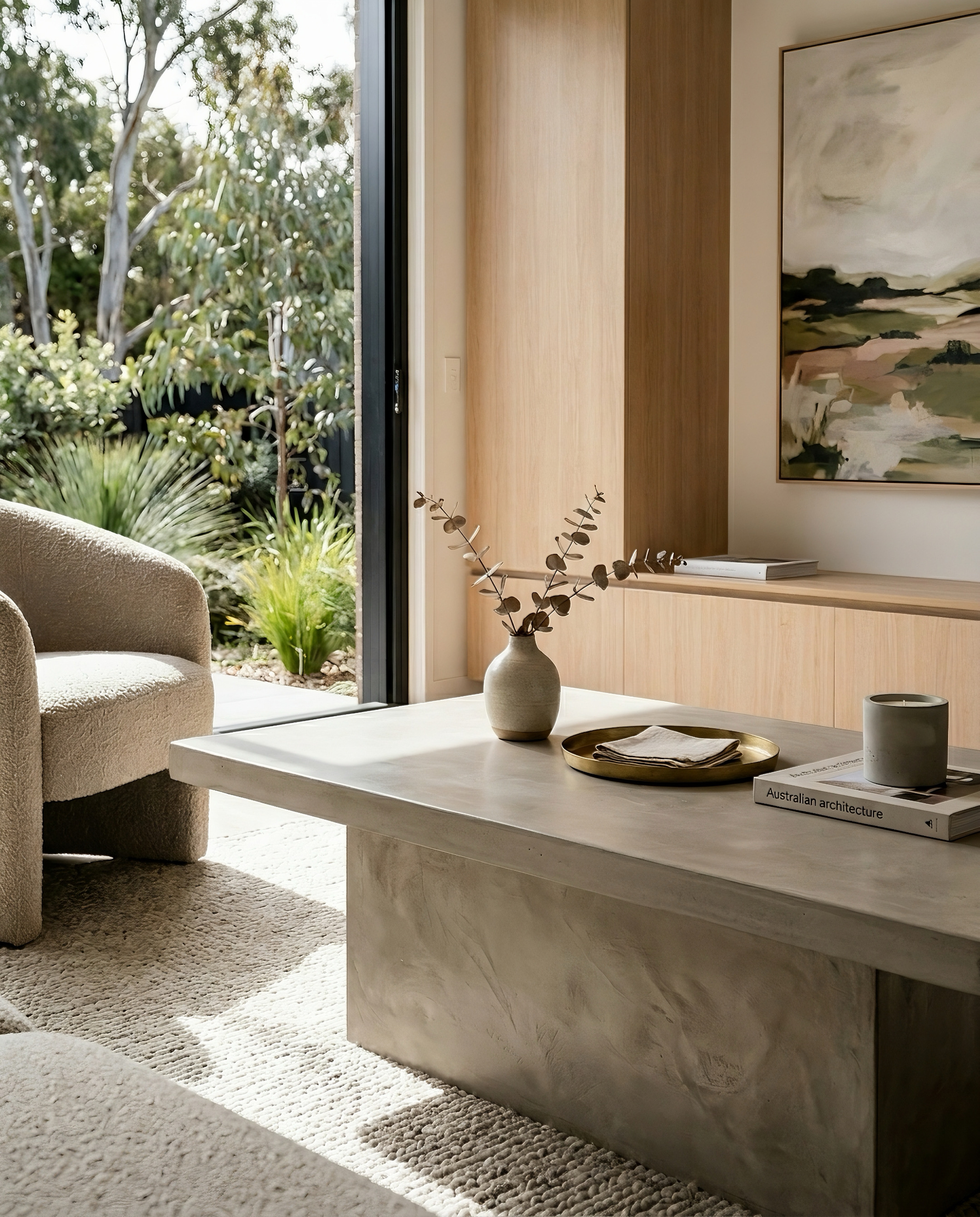
Microcement on furniture & joinery
Vanities, fireplace surrounds, media units, custom basins and built-in joinery wrapped in a continuous mineral surface — designed and detailed with your cabinetmaker.
Overview
A specialist surface system, applied by hand
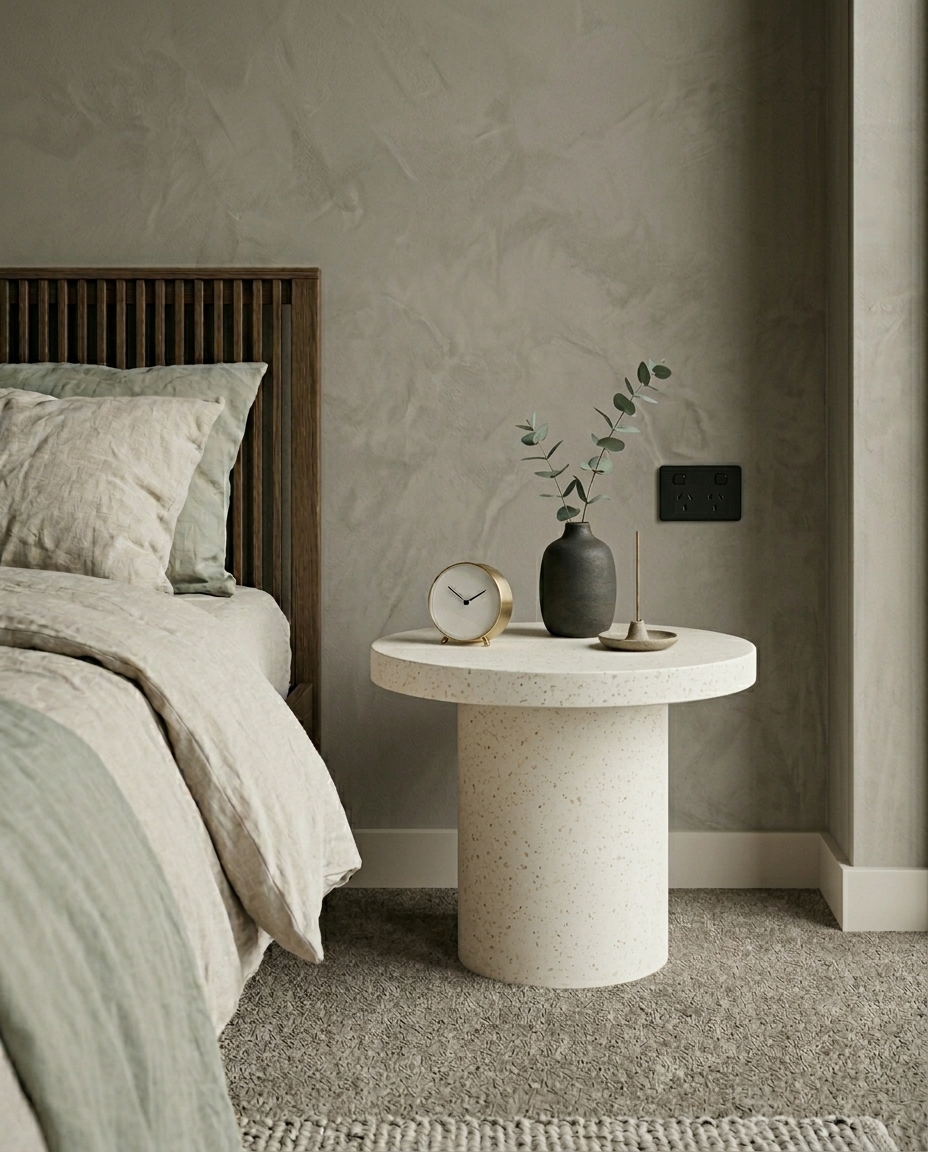
Microcement isn't limited to the architecture of a room — it can wrap built-in joinery, fireplaces, vanities, dining tables, basins and freestanding pieces in the same continuous mineral surface as the surrounding floors and walls. The result is a piece of furniture that reads as a single sculpted object, with no veneer joints, no edge banding, and no visible material change. We work directly with your cabinetmaker or fabricator on the substrate, then take it from priming through to final seal.
Application Process
How we
apply it
Furniture pieces have edges, undersides, openings and detail work that walls and floors don't. Every face that's seen has to be finished, and every junction has to be detailed. The substrate work and the edge build are where these jobs are won or lost.
Joinery Coordination
We work with your cabinetmaker on the substrate build — usually marine ply, MDF or compressed sheeting depending on the application. Edge profiles, drawer faces, door reveals and any visible underside are confirmed before our work begins.
Substrate Sealing
Every face of the piece — including undersides and inside reveals — is sealed with a bonding primer. This locks the timber, stops moisture movement and gives the first plaster coat a consistent surface to bond to. Skipping a face means future cracking on that face.
Preparation & Reinforcement
Faces, edges, corners, openings and movement conditions are assessed before compatible preparation and any reinforcement are selected.
Base Application
The selected base material is hand-applied and prepared between stages to maintain the agreed edges and planes.
Finish Application
The finish is worked by hand to the texture, tonal movement and edge detail agreed against the project sample.
Protective Finish
An approved compatible protective finish is selected for the material and actual use of the piece, including water, heat, touch, cleaning and sheen requirements.
Hardware & Detailing
Handles, hinges, drawer runners and any reveals are detailed at handover. Where caulking is required at junctions to walls or floors, it's colour-matched to the piece. The final piece sits as a single sculpted object — no joins, no edges that read as add-ons.
Recent Work
Selected projects
Microcement basins, vanities, fireplace surrounds and built-in joinery — bespoke pieces wrapped in mineral surface.
By The Numbers
The facts
Surface build confirmed for the selected product and substrate
Colour-matched to your floor, wall or scheme
Mesh-reinforced — including edges and corners
Vanity and basin exposure informs the compatible protective finish
The whole unit reads as one sculpted object
Built-ins finished in place, freestanding pieces in our workshop
Myths & Truths
Setting the record straight
Common misconceptions we hear, and the reality of working with mineral surface systems.
"Microcement is too heavy to use on furniture."
Suitability and finished weight depend on the joinery substrate, dimensions and selected system. The cabinetmaker and applicator should assess the complete piece.
"It will chip off the edges of drawers and doors."
Mesh-wrapped edges and a properly built base layer make the edge as strong as the face. Edge failures we see in other people's work come from skipped mesh or cheap substrate, not from the material itself.
"You can't get a basin or vanity protected properly."
Vanities and integrated basins require assessment of their substrate, water exposure, junctions and cleaning. An approved compatible protective finish is selected for those project conditions; it does not replace any required waterproofing membrane.
"It only works on built-ins, not freestanding pieces."
We finish freestanding pieces — coffee tables, plinths, display units, sculptural objects — in our workshop or on site, depending on size. Some of our most striking pieces are standalone furniture rather than built-ins.
"It will look different to the wall or floor next to it."
When the piece is finished by the same applicator using the same batch of pigment as the surrounding surface, it reads as one. That continuity is one of the main reasons clients choose microcement on furniture in the first place.
"It can't go on a fireplace surround because of the heat."
Microcement tolerates the radiant heat from a properly installed gas or wood fireplace when finished with the appropriate sealer system. Direct flame contact is not the application — we sit the system on the surround, not inside the firebox itself.
Request a Consultation
Got a custom piece in mind?
Whether it's a vanity, a fireplace surround, a media unit or a sculptural piece — bring us your concept and we'll work with your cabinetmaker on the substrate and finish the piece end to end.
Start Your Project